Loading...
Serving Gulfport, MS and surrounding areas. (228) 256-1842
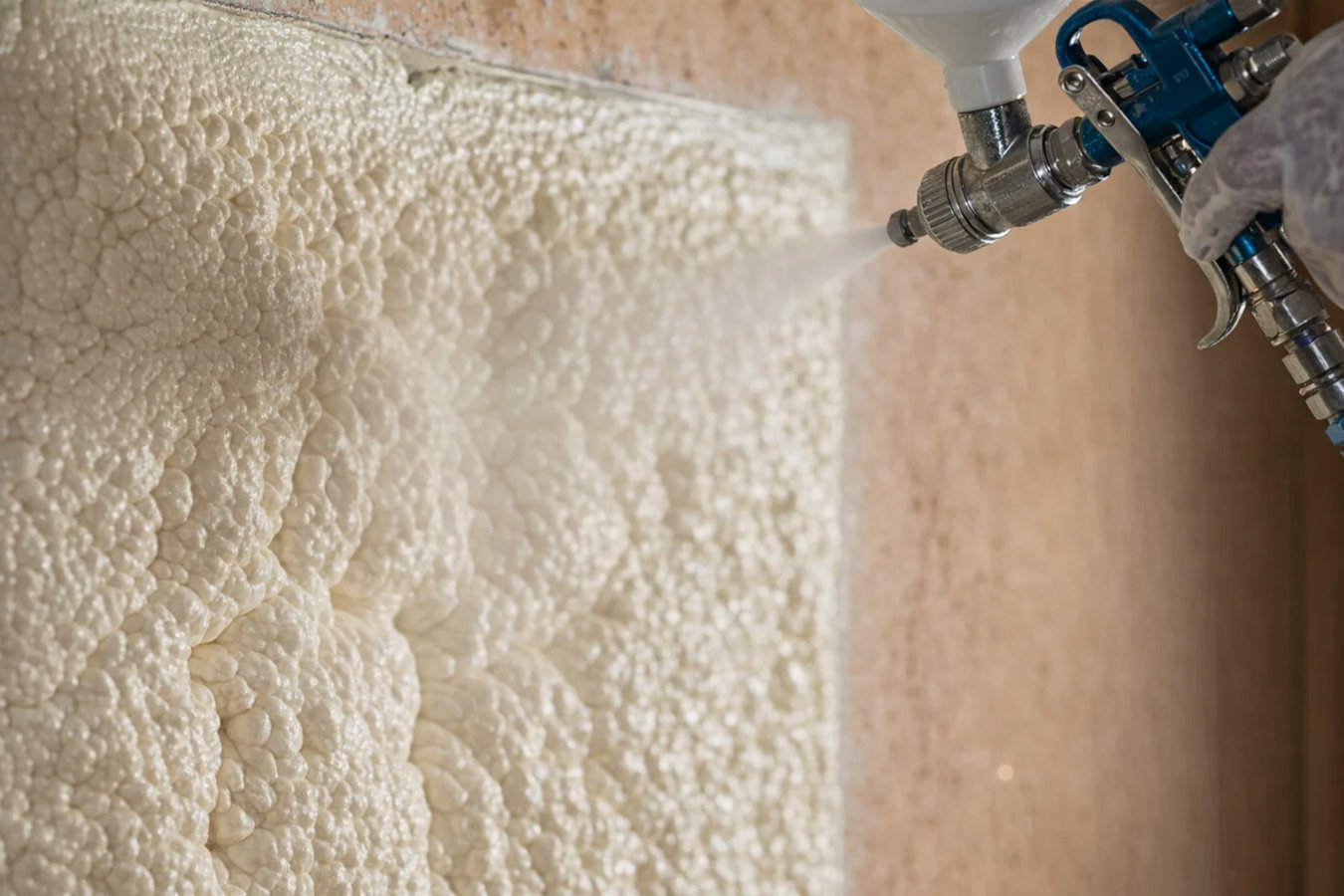
If your home feels muggy in summer no matter how long the AC runs, the problem is usually air leaks and under-insulation. Spray foam seals both in one step.
Spray foam insulation in Gulfport, MS creates an airtight seal that blocks heat and moisture at the same time - most jobs in an average-sized home are completed in a single day. Unlike fiberglass batts, foam expands into every gap and crack, which matters in the Gulf Coast climate where humidity finds its way through even small openings in your walls and attic.
Gulfport homes face a specific challenge: summer temperatures regularly exceed 90 degrees, outdoor humidity stays above 70 percent for months, and many homes were built in the 1960s through 1980s without modern air sealing. That combination means conditioned air escapes constantly, and your AC works overtime to replace it. Spray foam stops that cycle at the source. If you are also considering attic insulation to address heat gain from above, the two services work well together.
The two main types - open-cell and closed-cell - behave differently, and the right choice depends on where in your home it is going. We will walk you through both options during your free on-site estimate.
If your cooling costs climb sharply from June through August and your AC runs almost constantly, conditioned air is likely escaping while hot, humid outdoor air pours in. In Gulfport's climate, a poorly sealed home can cost hundreds more per year to cool than a well-sealed home of the same size.
If one part of your home feels noticeably more humid than the rest, that room likely has an air sealing problem. Gulfport's outdoor humidity is so high that even small gaps in your home's envelope let enough moisture in to make a room feel damp and uncomfortable despite a running air conditioner.
Stand near your attic access panel on a hot summer day and hold your hand near the edges. If you feel warm air pushing through, your attic is not properly sealed. Gaps around plumbing pipes, wires, and recessed lights are common entry points in older Gulfport homes.
A musty odor after rain or during humid stretches can indicate moisture moving through uninsulated or poorly sealed areas. In Gulfport's pier-foundation homes, crawl spaces are a common entry point. Condensation on pipes, discolored wood, or loose insulation are clear signs the space needs attention.
We install both open-cell and closed-cell spray foam depending on where the application is and what the home needs. Open-cell foam is softer and more flexible - it works well inside interior walls and upper attic spaces where some moisture vapor permeability is acceptable. For crawl spaces, exterior walls, and any area exposed to Gulf Coast moisture or potential flooding, we recommend closed-cell foam insulation, which is denser, nearly impermeable to moisture, and adds a degree of structural reinforcement that open-cell does not.
We work in attics, crawl spaces, exterior walls, rim joists, and around mechanical penetrations. If you have an older home that was never properly air-sealed during original construction, spray foam is often the most efficient way to address years of accumulated leaks in a single visit. Many customers also combine spray foam with our attic insulation work for a complete thermal envelope upgrade.
Best suited for interior walls, upper attic spaces, and areas where some flexibility and sound dampening are priorities.
Best suited for crawl spaces, exterior walls, flood-prone areas, and anywhere moisture resistance is the top concern.
Creates a sealed attic envelope that keeps Gulf Coast heat and humidity from entering your living space from above.
Seals the underside of your home against the moisture-laden air that moves up from an open crawl space in coastal Mississippi.
Gulfport sits in one of the hottest and most humid climate zones in the country. Attic temperatures here can exceed 150 degrees on a summer afternoon, and the combination of heat and Gulf Coast humidity accelerates the breakdown of standard insulation materials. Fiberglass batts, in particular, can absorb moisture over time and lose their effectiveness - spray foam does not. Homes south of Highway 90, which are often elevated on piers and fully exposed to coastal air movement, see the most dramatic difference after a spray foam installation because they had the most exposure before.
The Gulf Coast also has a hurricane history that matters for insulation decisions. Homes that experienced water intrusion during past storms may have insulation that was damaged and never fully replaced. We serve homeowners across the area, including Biloxi and Long Beach, and we assess for past moisture damage before recommending any foam application - because sealing moisture inside a wall cavity makes the problem worse, not better.
When you call, we ask a few basic questions about your home, the areas you want insulated, and any moisture or storm history. We respond within 1 business day and can typically schedule an on-site visit within a few days.
We walk through your attic, crawl space, or the areas of concern. We check for moisture damage, gaps, and any conditions - like old wet insulation - that need addressing before foam goes in. You receive a written quote that breaks down area, foam type, and cost. No obligation.
The crew arrives with equipment and seals off the work area. Foam expands and hardens within seconds of application. Most residential jobs finish in a single day. You and your family need to be out during spraying and for two to four hours afterward while the space ventilates.
We walk through the completed work, show you what was done, and note anything we found - like moisture-stained wood or pest activity - so you know what to watch. If anything does not look right, that is the time to ask before the crew leaves.
We respond within 1 business day. There is no obligation - just a free on-site estimate and a written quote. After you submit, someone from our office will call to schedule a time to walk through your home at your convenience.
(228) 256-1842Our crews work Gulf Coast homes every day and document each job from start to finish. You get a contractor who is accountable by name, with a clear record of the work before anyone starts.
We work on homes from the pier-foundation neighborhoods south of Highway 90 to the ranch-style houses north of downtown. Gulf Coast conditions - heat, humidity, storm history - are not abstract to us. We see them on every job.
We walk through your home, assess what is there, and give you a written quote before you commit to anything. You are never pressured to sign on the spot. Compare our quote against others - we want you to feel confident, not rushed.
Every project comes with a written estimate that spells out exactly what will be done, what type of foam will be used, and what the total cost will be. No surprises when the invoice arrives.
A free written estimate, experienced local crews, and a walkthrough of the finished work are the basics we consider non-negotiable. We document every spray foam project so you have a clear record of exactly what was installed before you ever call us.
We had Gulfport Insulation spray foam our crawl space after noticing the floors felt warm and our AC never caught up. The difference that first summer was real - our bill dropped and the house finally stayed at the temperature we set.
Rachel T., Gulfport - Spray foam insulation
They came out within two days of my call, walked the whole attic with me, and showed me exactly where the gaps were. The crew was in and out in one day. No mess, no pressure, and they called the next week to make sure everything was good.
Marcus D., Biloxi - Spray foam insulation
I was nervous about the chemicals and the re-entry time, but they explained everything upfront and left me a clear window for when I could come back. The back bedroom that used to feel like a sauna in July is finally comfortable.
Linda C., Long Beach - Spray foam insulation
Closed-cell foam is denser and uses more raw material per square foot. It also requires more precision during application. The higher cost buys you a moisture barrier, higher R-value per inch, and added structural strength - all of which matter more on the Gulf Coast than in drier climates.
Properly cured spray foam itself does not support mold growth because it contains no organic material for mold to feed on. However, if foam is applied over existing moisture or wet insulation, mold can grow on those underlying materials. That is why moisture assessment before installation matters.
Closed-cell spray foam adds a measurable degree of structural reinforcement to walls and roof decks. It bonds to framing and sheathing, which can help resist racking during high winds. For Gulfport homeowners in hurricane-prone neighborhoods, that additional rigidity is a meaningful side benefit. The Spray Polyurethane Foam Alliance has published guidance on this at <a href='https://www.sprayfoam.org' target='_blank' rel='noopener noreferrer' className='underline'>sprayfoam.org</a>.
Possibly, but the right sequence matters. Any moisture-damaged or contaminated insulation should come out first. Sealing moisture inside a wall cavity or crawl space with spray foam traps the problem and makes it worse. A thorough contractor will assess for past water intrusion before recommending foam.
After a quality spray foam job, the foam should be even, fully adhered to the surface, and free of large voids. In an attic, you should not be able to see daylight through any seams. Poor work shows up as thin spots, areas where foam pulled away from the surface, or sections missed around pipes and wires.
Spray foam is not always the best fit for every space or budget. For interior walls in a straightforward new build without moisture concerns, blown-in fiberglass or cellulose can be a cost-effective alternative. A contractor who only recommends spray foam for every job is worth a second opinion.
For more on spray foam safety and installation standards, the Spray Polyurethane Foam Alliance and the U.S. EPA publish guidance written for homeowners.
Pair spray foam air sealing with blown-in attic insulation to reach the R-value your Gulfport home needs for year-round comfort.
Learn moreLearn more about the high-density foam option that adds moisture resistance and structural strength to coastal Gulf Coast homes.
Learn moreSummer cooling season does not wait - the sooner your home is sealed, the sooner your bills reflect it.